

In Ecology as Freedom, Murray Bookchin argues that there were three general historical periods in humanity’s relationship to itself and the natural environment: organic societies, hierarchical societies, and class societies. Organic societies in Bookchin’s view are defined by their egalitarian nature, in which each individual was a part of the whole: each animal, plant, and part of nature was part of the world and intertwined with the humans also embedded in it. Organic societies emphasized the differences between each living being, rather than modern classifications that may group items together for conceptual understanding. Each living being or thing was respected for its unique traits and contribution to the overall cosmological whole. Organic societies have existed for most of human existence and were, Bookchin argues, the default form of human social organization throughout most of human history in the longue durée.
Bookchin describes organic societies’ way of thinking compared to a modern viewpoint:
...their thinking occurs in a cultural context that is fundamentally different from ours. Although their logical operations may be identical to ours formally, their values differ from ours qualitatively. The further back we go to communities that lack economic classes and a political State–communities that might well be called organic societies because of their intense solidarity internally and with the natural world–the greater evidence we find of an outlook toward life that visualized people, things, and relations in terms of their uniqueness rather than their ‘superiority’ or ‘inferiority.’1
Each thing in the world, each person, each process, whether a god, or the work of nature, was viewed in terms of its uniqueness and its contribution to the overall whole. Each person had a sense of responsibility for the community and a responsibility to the world to manage its resources wisely and what we would now call, with the view of hindsight, relative sustainability. Nature itself was part of the flows of life, not a set of resources to be dominated or managed through reason. The “superiority” of human beings, that God or gods made earth to be conquered and controlled, or that the “inferior” animals and plants and natural world should be shaped by the whims of humanity, did not exist as a frame of thinking.
People living in organic societies’ conception of ownership and land management is foreign to the modern conception of private property. Organic societies were marked by usufruct rights, in that anyone could use any resource for the sole purpose that they needed it. If one was using an object or a natural resource, and it was being utilized, it was one’s for the period in which it was being utilized. Rather than hoarding resources or controlling access at chokepoints2 as in the modern world, people in organic societies used the resources around them that they needed, and did not lay permanent claim to a river or a herd or a specific circumscribed area of control or ownership. Others were free to use the same common resources, so long as they were using it for a purpose. The use of the world’s resources was entirely functional. In a society integrated into the natural environment that respected nature’s limits and nature’s place in the cosmological whole, resources did not get denuded by large projects transforming the environment as later in human history.
The key to all of this is limits, which people in organic societies understood. They lived by fulfilling simple needs and participating in nature-steeped cultures that were deep and meaningful to them in ways that the modern world is not. In the modern world, and in the ancient world, when palaces were built, or when large construction or terraforming projects occurred, resources were appropriated without long-term thinking about the ecological effects of human use of the environment. The need to create, dominate, and control, or to increase desire and pleasure either through domination or modern rituals such as consumer culture necessitating excess resource extraction, did not exist in organic societies.
Needs in these societies were simpler because the world was less complex. There was pain, of course: a severe storm or shift in environmental conditions could have drastic consequences to an organic society without a world of dams and levees. Life was more tenuous, but needs were simpler: if physical needs were met, and the individual had a family and a community of relations, their social needs were also met. Their spiritual needs were met through their relationship with nature and their understanding of their group’s place in it. They did not feel the existential “lack,” the hole that the modern person might feel. Psychiatrists and psychoanalysts would have no place in an organic society. The initial shock of the storms were in time weathered by the communal group’s support of the community, which was conceptualized as rooted in the cosmological whole, storms and all.
Organic societies thus form an interesting contrast against which we can compare premodern and modern social organization. Hierarchical societies, which were succeeded by class societies under capitalism, had a different, exploitative view of (most) human beings, who do most of the work, and of nature, which was viewed primarily in instrumental terms: nature was a resource existing for human consumption and transmutation into other forms of matter that were more valuable for meeting human needs than as things-in-themselves.
Hierarchical societies developed over human history as wealth and resources were concentrated and then controlled by a specific group or class: a priest class, a warrior class, or multiple, sometimes overlapping classes that held power and resources over others based on a “natural” hierarchy that was justified, usually religiously, but also through other means such as war or through the inherent merits of a specific class over others. For example, fast forward and think of early modern aristocrats in Europe: even with the humanistic ideas and the focus of the individual’s rights in Enlightenment philosophy, the early modern landed gentry certainly thought they were better, smarter, and were entitled to ruling over the average people based on their birthright and ownership of land. Some earlier Mediterranean and Western civilizational examples of hierarchical society would be Ancient Greece and Imperial Rome, and later, medieval Europe and the medieval Islamic caliphates. Hierarchical societies are defined based on their structure of power distribution, not necessarily their specific cultural values or achievements. Many of the medieval Islamic caliphates were extremely rich culturally and often presided over diverse populations without open persecution of non-Muslims, but nonetheless operated in a strictly hierarchical manner. The unique hierarchy of each specific society and the conception of nature as merely a resource (rather than nature as unique things-in-themselves with their own purposes in the universe) define hierarchical societies as compared to organic societies.
Class societies emerged from hierarchical societies as the demands of industrial capitalism transformed the relationship between the need for materials and the need to coordinate (command) the masses. In Europe post-1789, although the political struggle for the individual and the individual’s rights in the West came to the forefront of political and philosophical debate, the bourgeois victory in the French Revolution and the development of new technologies in the UK and the US such as the steam engine and cotton gin transformed capitalism from a mercantile, protectionist economy over the nineteenth century into an individually-owned global enterprise in which capital became the center of political economy and societal arrangements. The hierarchy of each person was soon based on where one existed in the economic order of things, which in time produced formal and informal classes.
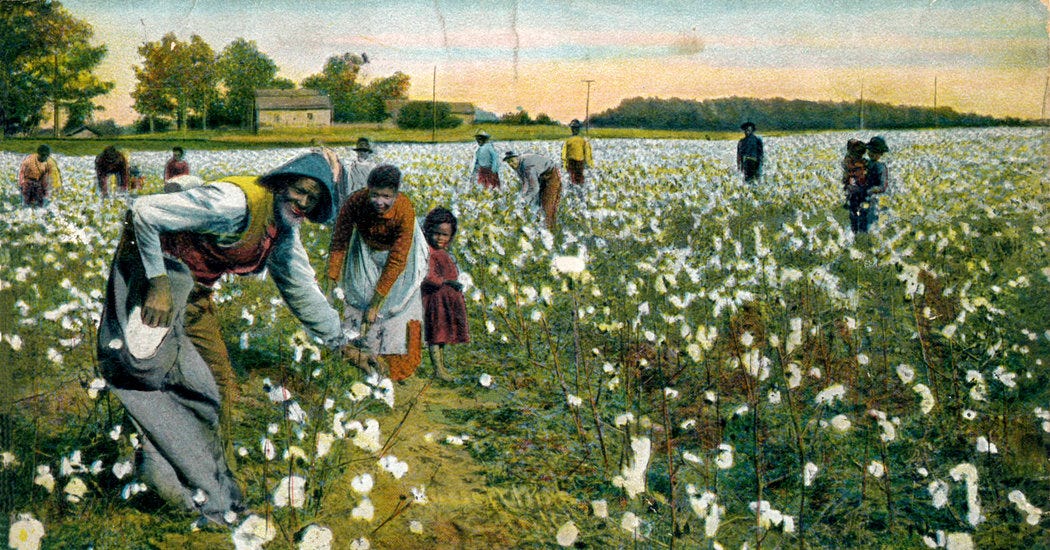
Classes were not unique to wage laborers and owners or investors. The flow of slaves from the African coast fueled the production of cotton in the American South (as well as, quite brutally and with a significant death toll, sugar in the Caribbean). In time, steam-powered locomotives and ships allowed the movement of goods across water bodies at greater speeds and with greater profits. The racialized classes of the Africans forcibly transported to the New World and the many mestizo classes in Latin America led to new forms of colonial rule in which the bourgeoisie, along with the remaining aristocrats, continued to rule over the newly industrialized global capitalist machine from both their mother countries and colonial centers at the periphery of European empire.
The raw inputs of human beings, labor, and capital, powered by markets, demand, and profit, became a new, truly global form of increasingly industrialized capitalism.3 This industrial era was the turning point in which capital itself became the center of all political economy: physical capital, finance capital, and human capital reigned supreme and more than any other factor determined colonial and imperial policy. The center of the empire was surrounded by the periphery of its colonies, which fed the center’s financial apparatus. Philosophically, capital was the center of the entire global system for the first time in human history.
Capital as the centrality of the colonial world had cultural effects that highlight other differences between class societies and organic societies that illuminate domination into the contemporary era. Consider the idea of the contract, for example, which is one of the bases of contemporary civilization. The contract ties the relations of parties together in a written agreement of what transactions are to take place. Whether a contract is abstractly conceptualized as Rousseau’s social contract, or concretely and legally conceptualized as modern employment contracts between employer and employee, or the many business-to-business contracts binding together modern capitalist operations, a contract would have seemed absurd to a person living in an organic society because organic society’s relationships between people were based on trust and understanding.
To base one’s relationship on exchange belies the idea of trust, which was a key component of organic societies due to the personal nature of small, personal communities. A contract implies no trust: even if the parties do nominally trust one another, the agreements in each contract can go to arbitration, mediation, or more aggressively, to court, if the contract is broken. In a modern society of supposedly “self-interested” individuals and companies as defined by classical and neoclassical economics, this is common sense: one does not know what market forces might force the hand of the other party to fail to meet their terms of the contract, therefore, there must be some legal mechanism for enforcement to ensure both parties hold up their end of the bargain, or negotiate out of the bargain in a manner that benefits both parties. Or, simply to assume everyone is inherently greedy in modern society (every accusation is a confession), Bookchin discusses the underlying idea of modern contract more bluntly: “The human spirit can never transcend a quantitative world of ‘fair dealings’ between canny egos whose ideology of interest barely conceals a mean-spirited proclivity for acquisition.”4
A contract, in fact, is an agreement based upon violence. This is demonstrative of the true basis of modern civilization, as violence as a mode of enforcement and capitalism as a reification of all physical, abstracted, and human commodities provide the foundation of the capitalist project. Byung-Chul Han explains the inherent violence in contract:
A contract is based not on trust or on a promise but on violence. Where there is absolute trust or an absolute promise, a contract is superfluous. A contract involves violence insofar as it threatens penalties or sanctions for its violation. We enter into a contract because we cannot trust. Trust excludes the possibility of violence. A law on which we agree also has a contractual character. It is precisely the threat of the use of violence that forces the partners entering into a contract to abide by it, and likewise to abide by a law. A contract radically removes the space of trust. We have to rely on trust because we cannot determine all relations between humans in legal terms. Trust facilitates social interaction.5
If violence is the foundation of social relations under capitalism, then the modern person conceptualizes relationships between human beings as inherently antagonistic: the atomistic, self-determined individual of the post-Enlightenment area defends his or her right to private property against other atomistic, self-determined individuals also defending their private property. Usufruct rights have given way over thousands of years to clearly delineated legal private property rights, to be debated by legal experts in the form of attorneys, judges, and magistrates. The Esquires of today interpret what would have been commonsense relationships between actual human beings in organic society. The organic society’s world of usufruct and personal property (property that was owned by individuals based on its consistent and regular usage and respected by the community) gave way to abstractions of personal property, in which commodities, human beings (under slavery), and even futures (economic gambling) became “private” rather than personal, and thus within the portfolio of the capitalist, justified by violence.
How did we get here? What changed throughout the course of human history from organic society to the class society in which violence is the basis of social relations? We of course know the general narrative of human history as it is taught and described above: as agriculture and irrigation led people to live longer and more settled lives, gradually a class of leaders emerged and over several thousand years. A variegated number of different hierarchical civilizations emerged in time, unevenly but gradually, that all were eventually brought into the imperial market of industrial capital discussed above. The centers of domination became the centers of capital, and the periphery of the empires became the labor markets that fed the empire of capital globally. These events necessitated new forms of relationships between people to ensure the smooth functioning of various forms of economic organization that culminated in the Cold War and then global capitalism. This is the conventional, economic and technological deterministic narrative of world history.
The question is: why did this economic and technological narrative happen over several thousand years? Was it inevitable that the increasingly complex nature of each civilization required domination? Was the concentration of wealth and capital inevitable, as we are taught in economics classrooms? Bookchin’s answer is different in that, over the longue durée, there was an overall shift to a change in human conception of needs of the people in increasingly hierarchical societies. The growth of hierarchical societies involved a fundamental shift in mindset about how to get human needs met. The domination of nature, and the domination of others, formed the basis in which needs became merely a force of production, rather than a subjective experience of the individual and group. This ideological shift over time seemingly necessitated increasing domination:
Needs, in effect, became a force of production, not a subjective force. They become blind in the same sense that the production of commodities becomes blind. Orchestrated by forces that are external to the subject, they exist beyond its control like the production of the very commodities that are meant to satisfy them. This autonomy of needs, as we shall see, is developed at the expense of autonomy of the subject. It reveals a fatal flaw in subjectivity itself, in the autonomy and spontaneity of the individual to control the conditions of his or her own life.6
As the autonomy of needs became a reified force of production in the minds of the rulers, needs became conceptualized as the end-goal: civilizations moved to forces of production that would meet these essential and assumed needs. This is not to say that farming improvements or technological improvements that allowed people to live longer were inherently bad—physical needs of course should be met by the best technologies at hand if human life is at stake. But the need for arbitrary power? The need for longevity and resistance to death, as exemplified in the building of massive pyramid tombs in Egypt? The need for more things? These forces of desire, focusing on the material and the self-absorption of its leaders, led hierarchical societies increasingly to regiment their societies and ensure at least one class was doing most of the work so the other class(es) could benefit. As Bookchin notes, the loss of the autonomy of the average person was the price of focusing on the autonomy of needs, and I would argue, later, the autonomy of capital. This blind spot to the autonomy of the individual’s subjectivity created a form of psychological alienation that long preceded Marx’s writing about the alienation of the worker.
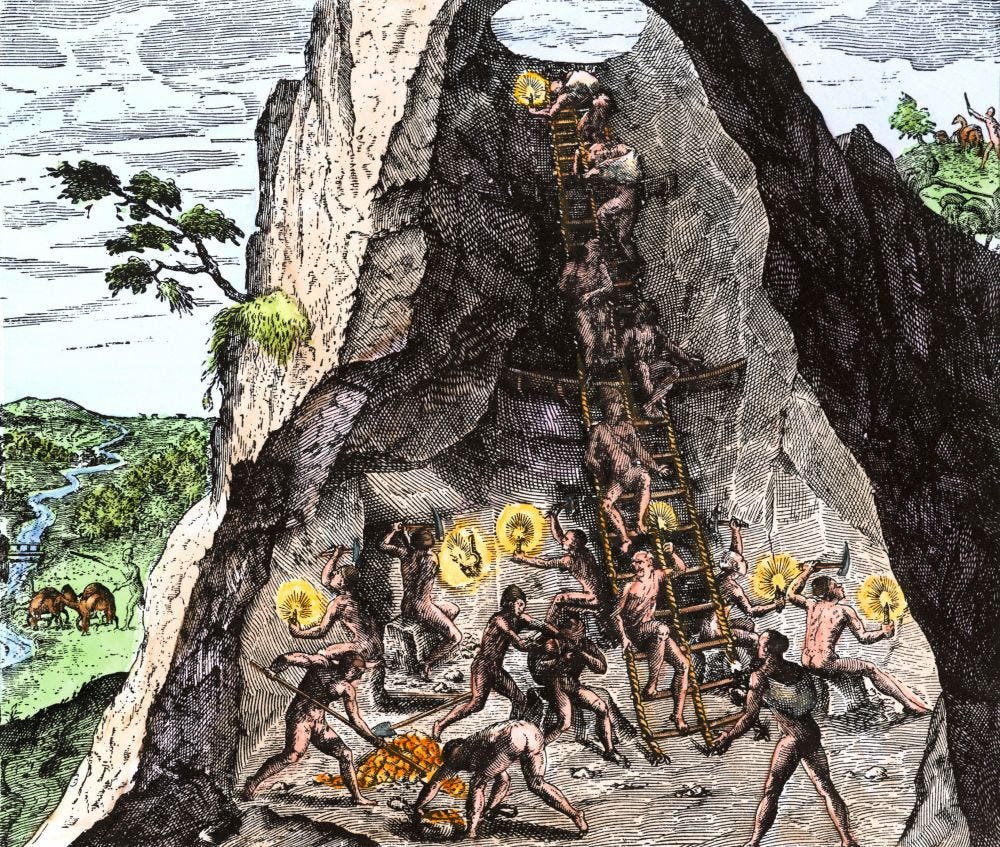
Hierarchical societies then, developed over the next few thousand years, in many forms throughout the world: Chinese dynasties, the Mali Empire, the spread of Islam throughout the Mediterranean, and the European early modern states and their North and South American colonies. Each civilization operated on hierarchical bases, increasing their riches for some classes at the expense of others. Elements of organic societies did survive within these empires. For example, the Spanish colonization of South America did not immediately uproot all of the tribes and their traditions, although many were enslaved to work in silver mines in South America, and certainly the massive importation of slaves into Brazil changed the trajectory of the tribes living there. Native Americans in North America that survived Atlantic diseases continued as before European encroachment into their lands well into the 18th century. During this time, Native Americans retained some organic traditions and were trading partners, allies, and enemies of the British and French authorities and the various colonists, many of whom married into Native American tribes and left European colonial society for a different life.
The overall trajectory of hierarchical society continued until around the end of the 18th and beginning of the 19th century, when a variety of Atlantic revolutions (US, France, Haiti, Latin America), technological innovations as mentioned above, and Enlightenment ideas began to empower the bourgeoisie across the Western world to accumulate more capital and invest and reinvest in larger and more expansive businesses, whether through the UK commerce monopolies in India, or the industrial North of the United States. The steam engine and the power of coal to create early industrial production necessitated the coordination and control of large groups of people (including women and children in the textile mills). Over time, as wage labor replaced home production and the artisans were replaced by the machines, classes solidified and the hierarchical society, over time, became the class society.
This led psychologically to what Bookchin calls a new epistemology of rule, in which not only the material means of production was rapidly changing lives and economic relationships of dependency and exchange, but also the shift in production led to a shift in mental production through the mental de- and reterritorializations of the sensibility and commonsense of what psychological life can and should mean under this new capitalist world:
The shift from hierarchical to class societies occurred on two levels: the material and the subjective. A clearly material shift was embodied in the emergence of the city, the State, an authoritarian technics, and a highly organized market economy. The subjective shifts found expression in the emergence of a repressive sensibility and body of values — in various ways of mentalizing the entire realm of experience along lines of command and obedience. Such mentalities could very well be called epistemologies of rule, to use a broad philosophical term. As much as any material development, these epistemologies of rule fostered the development of patriarchy and an egoistic morality in the rulers of society; in the ruled, they fostered a psychic apparatus rooted in guilt and renunciation. Just as aggression flexes our bodies for fight or flight, so class societies organize our psychic structures for command or obedience.7
Once the reterritorialization in the form of new psychic structures of domination took place across Western society, and increasingly anywhere else factories were built, industrial capitalism and the class society saw the removal of most, if any semblances of organic society in mainstream thinking until the recent rediscovery of ecological thinking. Industrial capitalism eventually, as we know, shifted into a postindustrial late capitalism of the spectacle post-World War II. This epoch in which we are still living is the end of any semblance of the self outside of the market. The market and capital lives—capital is alive, but most people in late capitalist societies are spiritually dead and disconnected from their organic roots. We are disconnected from our roots in our modern world of abstraction and commodity forms, and the cultural hegemony of late capitalism perpetuates abstracted thinking and worship of commodities in its policing of language and concept.

The autonomy of needs as an ideology continues to steer the choices we make as a civilization in the commonsense notions of the modern world: nature must be controlled, dominated, and must fit to our needs as we perceive them. Our standard of living necessitates the exploitation of the earth and (most) of its people. While it is sad that children in Southeast Asia stitch the Nike shoe which has a ludicrous markup, the commonsense, hegemonic interpretation is that this is the cost of living in a competitive global world. If we want the Nike shoe for our children, we must accept the tradeoffs that the poor child will die in poverty. The needs of our child are more important than the people in the “developing” world (developing being, of course, a cruel and hypocritical word).
It is needs, and a reassessment of our needs, that could reshape this autonomy of “needs” of the market. The neoliberal conception that the market is an autonomous force that must be worshipped is an elaborate fiction concocted by sociopathic positivist thinkers who would sell their own mothers down the river for a dollar. There is assuredly no reason we need so much in this society. We can live simpler, happier lives, without brand name shoes, without the latest gadget that performs the same functions as the last but in a shinier form, without a new car, and without other excesses that are won at the cost of human lives and limbs.
We can get our desires met in ways that are human: socializing, giving back, helping each other, lending a hand, spending time with people we love, and most of all, spending a lot less time at work and worrying about work. The market impetus, the autonomy of needs, and the market fetishization are at the heart of our cultural malaise and our mental health issues. It is possible to return to organicism and to rethink the way we live our lives, even through small actions and mindset changes. To be and think organically is to be free, in opposition to a modern civilization of sociopathy. We have the ability to choose our needs, not be a slave to the ones concocted by marketers and R&D teams who would end human lives to increase the company stock one iota.
Bookchin puts it best: “If the object of capitalism or socialism is to increase needs, the object of anarchism is to increase choice.”8
Murray Bookchin, The Ecology of Freedom (Cheshire Books, 1982, page numbers from The Anarchist Library online edition), 37.
Rebecca Giblin and Cory Doctorow, Chokepoint Capitalism: How Big Tech and Big Content Captured Creative Labor Markets and How We'll Win Them Back (Beacon Press, 2022). Giblin and Doctorow argue that in the modern tech world, companies work for monopolistic “chokepoints” through which they can extract fees from everyone who passes through their platforms, and lock users and businesses into these fees perpetually to increase profits. I think this concept is useful for describing the throttling of any resource in a capitalist society by a monopoly or near-monopoly. When the laws of supply and demand no longer apply, the exploiter can extract as much as they want from the chokepoint. The only choice then, for the user/consumer, is complete refusal of the product or service, an extreme to which not many are willing to go to resist.
One of the best examples of this process is the the flows of cotton from the fields to the market. For more on the relationship between cotton and the rise of industrial capitalism, River of Dark Dreams by Walter Johnson (2014) describes the internal imperialism that spread in the US via rivers fueled by cotton, steamboats, and funding by Northern financiers, while Empire of Cotton by Sven Beckert (2014) gives a global view of how US cotton flows dominated and shook the global markets, particularly India, and over time reshaped flows of global capital and the trajectory of national economies in the wake of the US Civil War and beyond.
Bookchin, Ecology, 43.
Byung-Chul Han, The Spirit of Hope (Polity Press, 2024), Ch 1.
Bookchin, Ecology, 57.
Ibid., 73.
Ibid., 58.
Harvey - look for a couple stories coming from me soon that tell some of this — “old man and woman” and “money traders”
you don’t mention Graeber and Wengrow… they fit here: https://peterderrico.substack.com/p/the-dawn-of-everything-a-new-history?utm_source=publication-search
another useful author: Robert Cover: [quote from my book] — “Professor Robert M. Cover, in “Nomos and Narrative,” said that law exists within “narratives that locate it and give it meaning.” These narratives—stories—constitute “a nomos—a normative universe.” He added, “This nomos is as much ‘our world’ as is the physical universe of mass, energy, and momentum.”90
“Cover famously described political and juridical force in “a modern nation-state” as necessarily involving literal force: “Legal interpretation takes place in a field of pain and death.” He added, “Interpretations in law also constitute justifications for violence which has already occurred . . [leaving] behind victims whose lives have been torn apart by these organized, social practices of violence.”91